

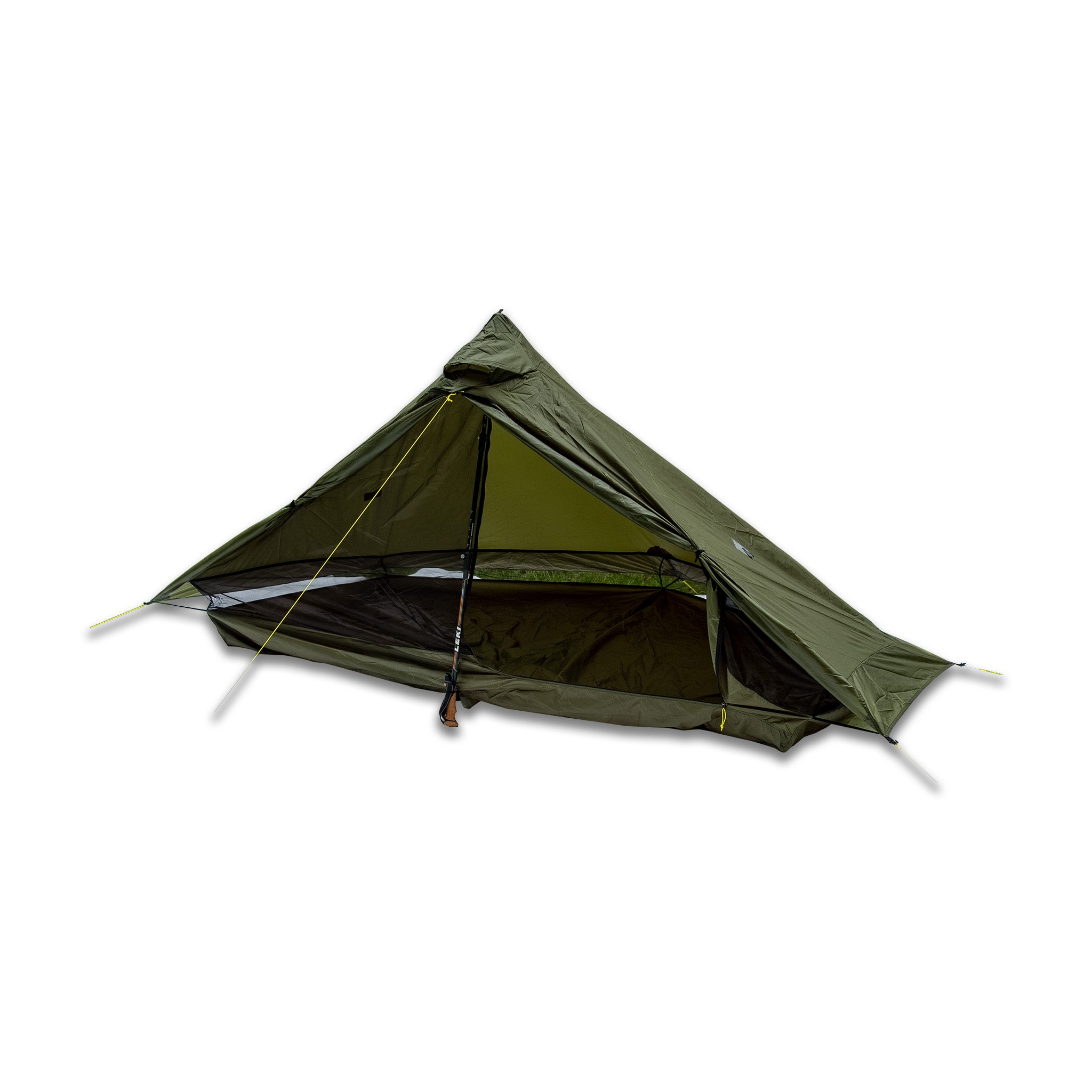
Lunar Solo Backpacking Tent
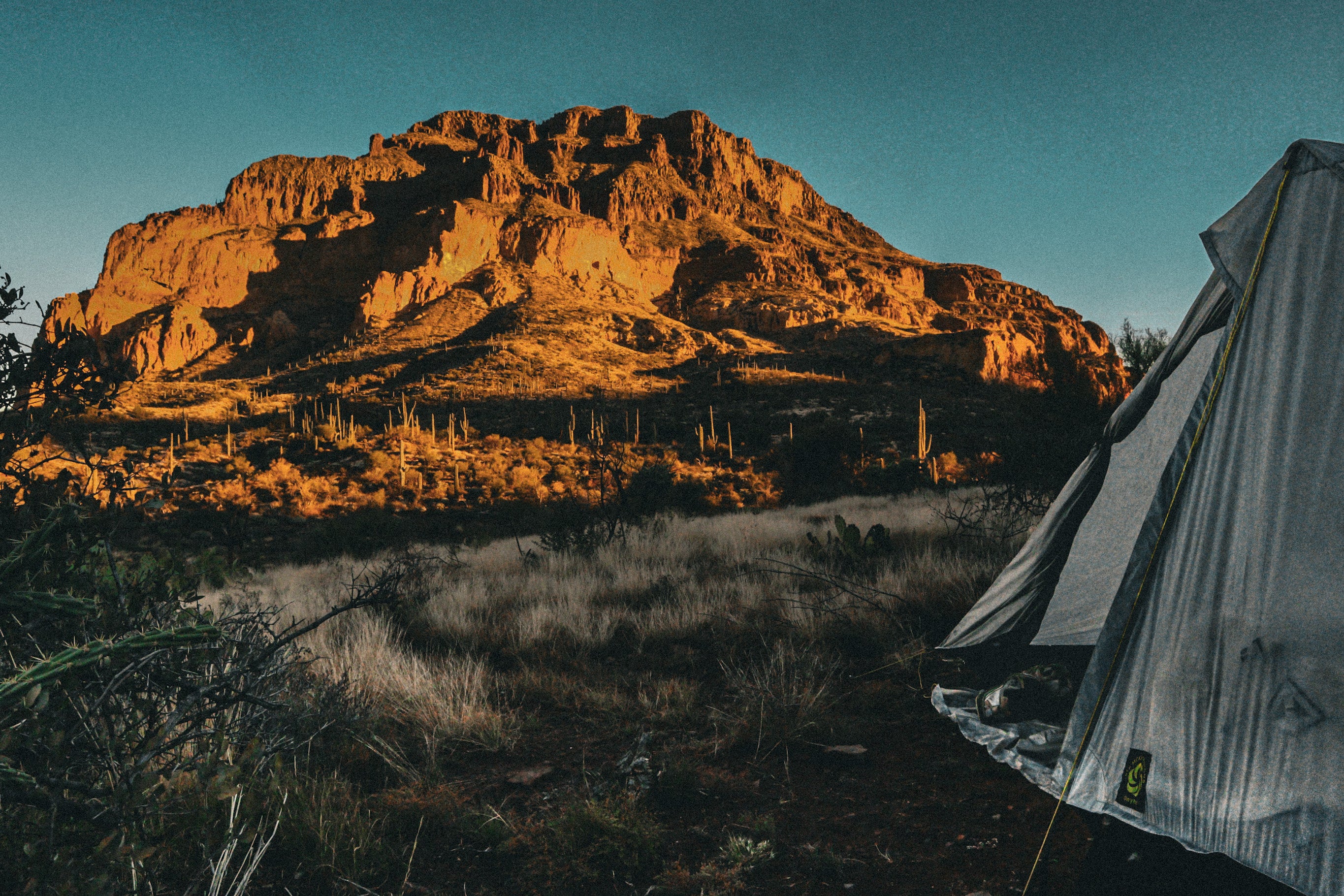
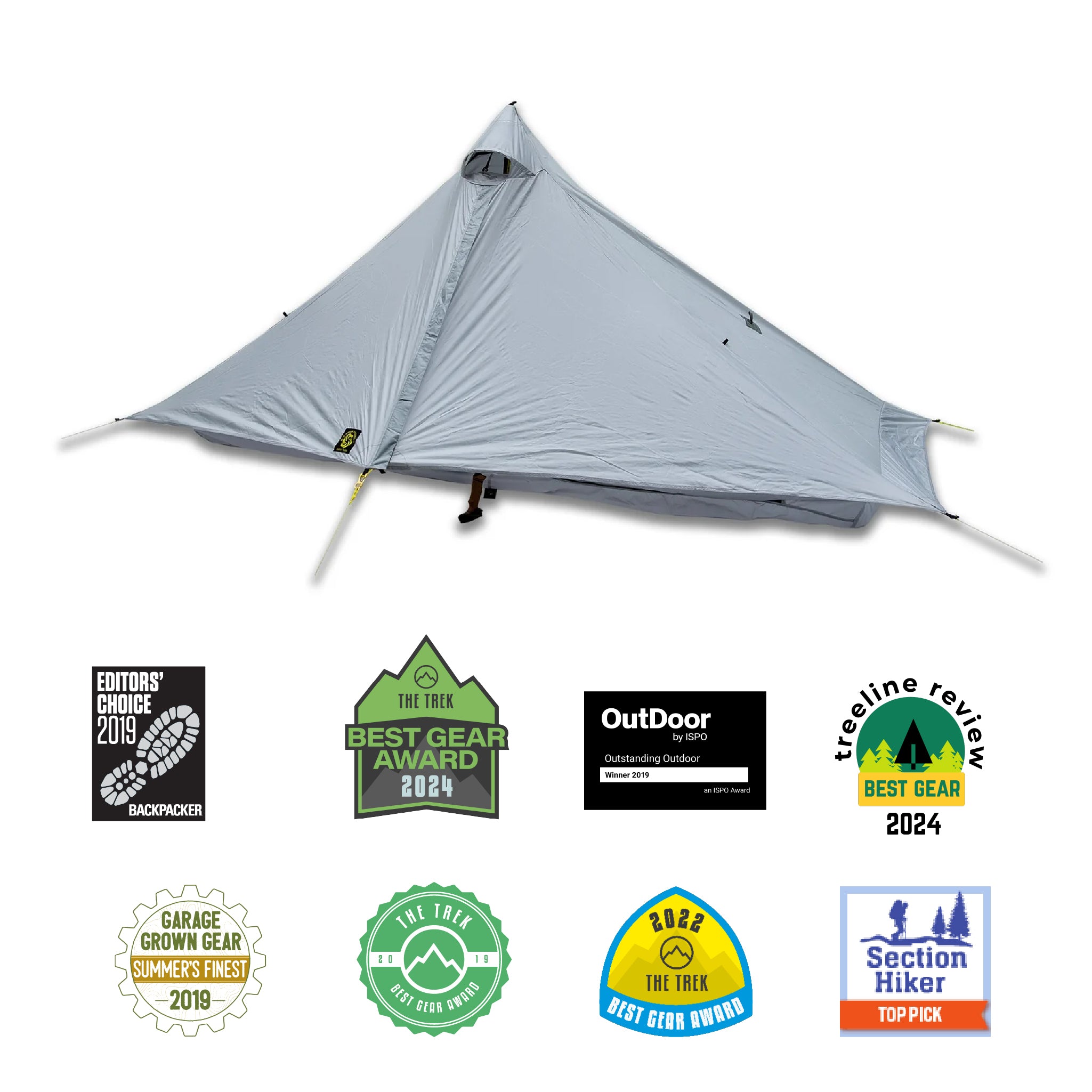
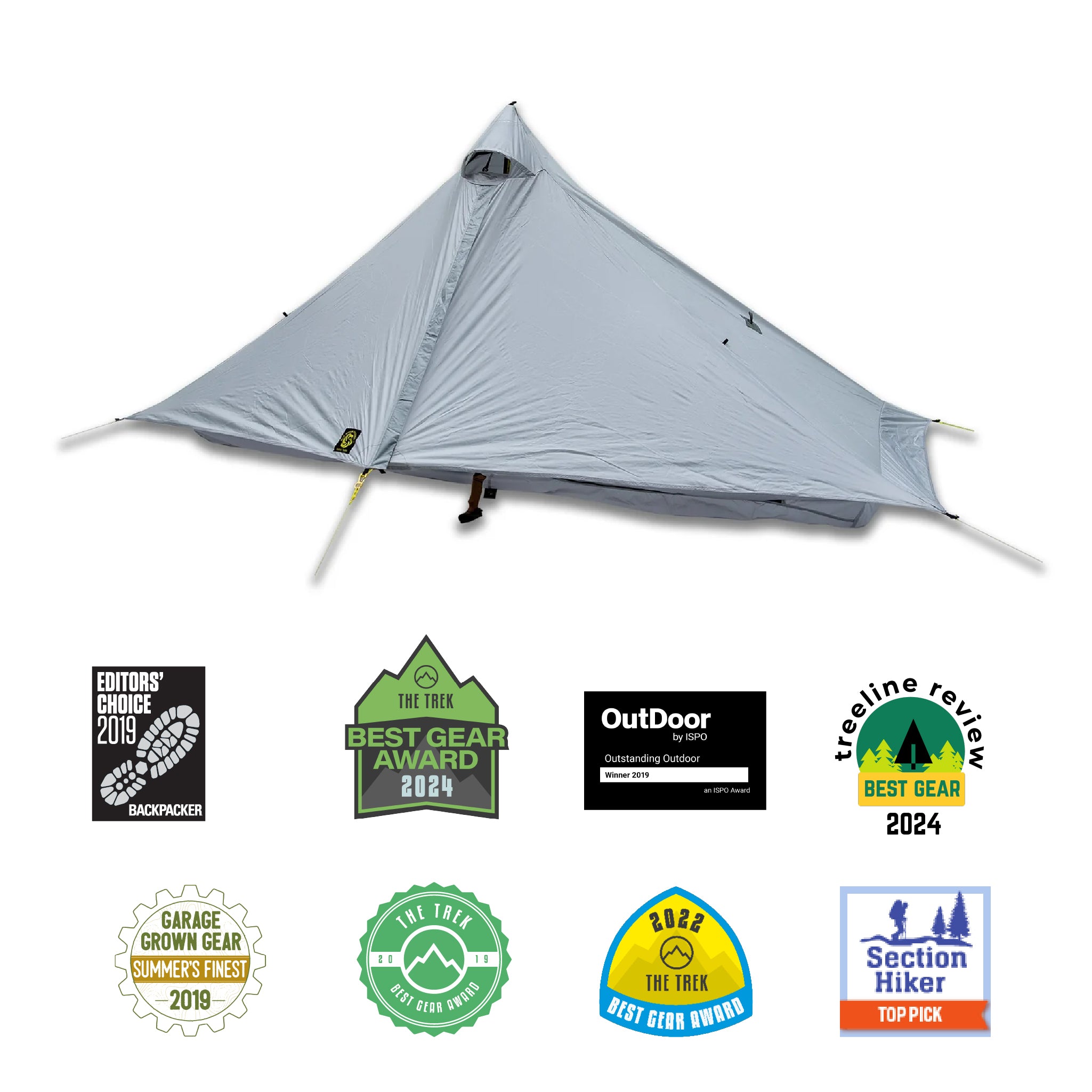
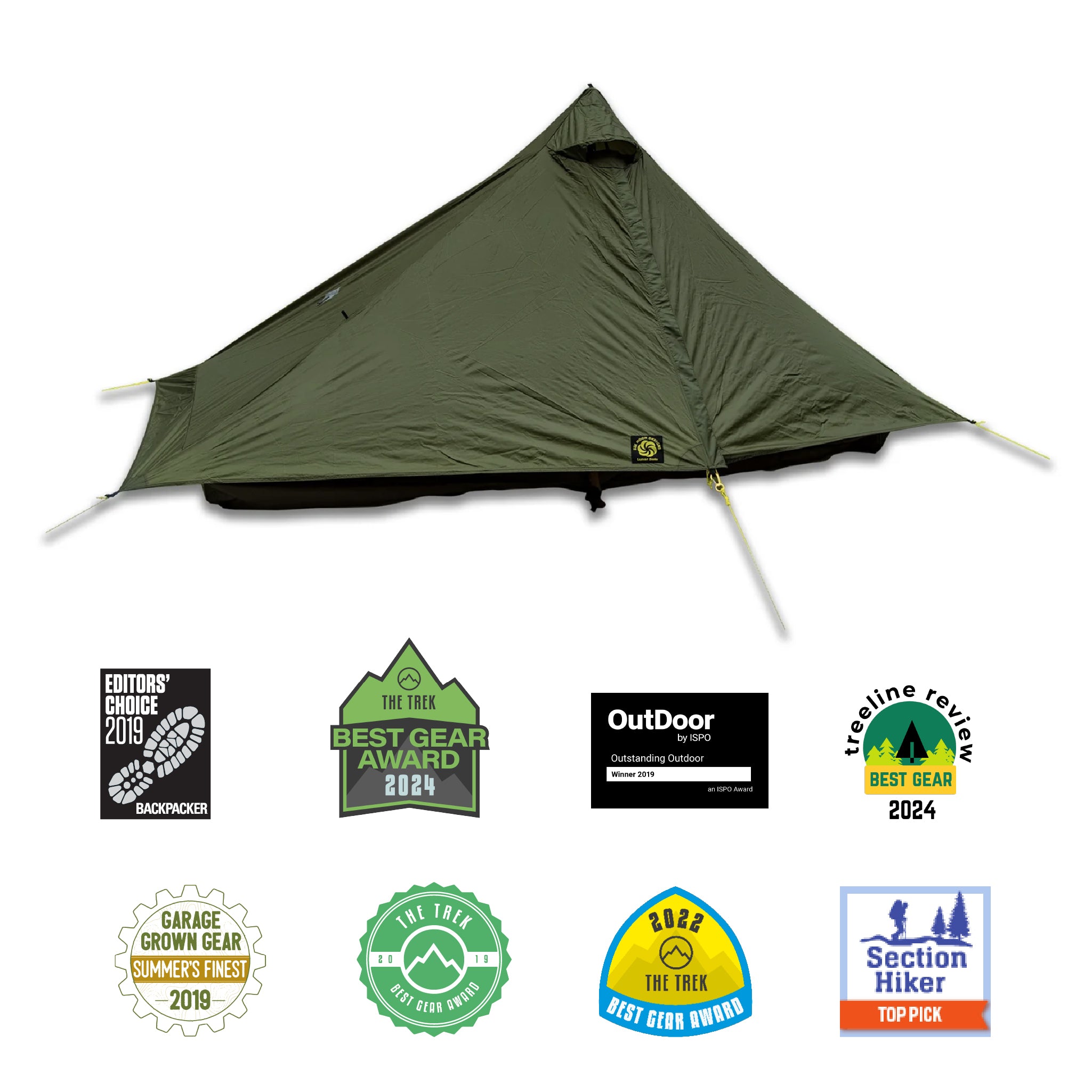
The award-winning Lunar Solo is a single person ultralight tent.
1 Person Tent | Best for:
- Thru Hiking
- Bikepacking
- Hikers with dogs
Required to make this shelter fully waterproof. Choose one:
Typically adds 1 to 2 business days
Something went wrong adding this to your cart. Please try again.
Free Shipping, Lifetime Support
Pickup available at Six Moon Designs
Usually ready in 24 hours
Lunar Solo Backpacking Tent
Gray
Six Moon Designs
8250 Southwest Nimbus Avenue
Beaverton OR 97008
United States

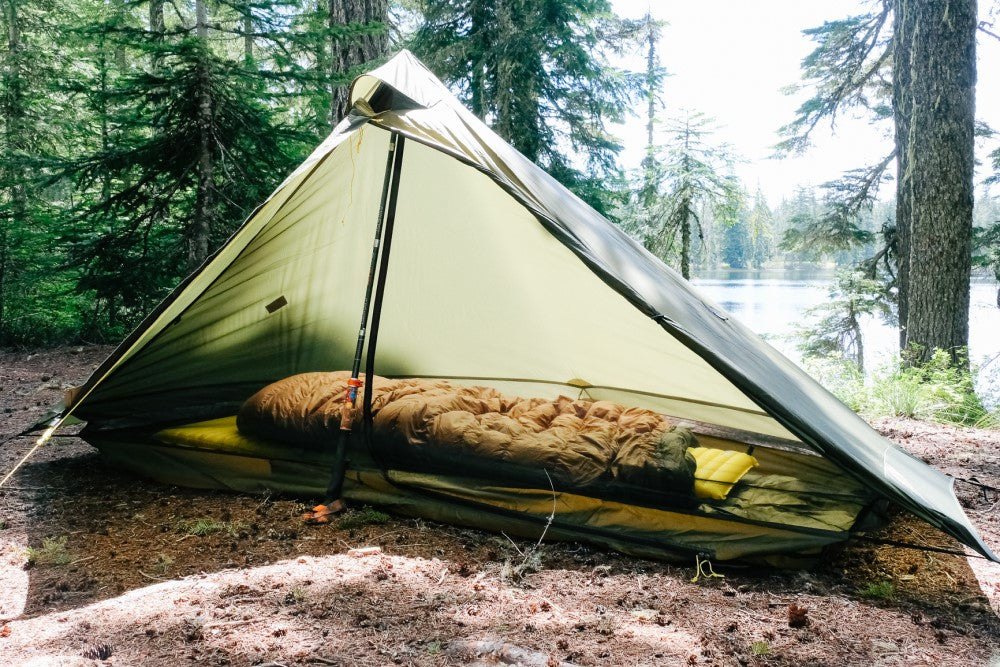
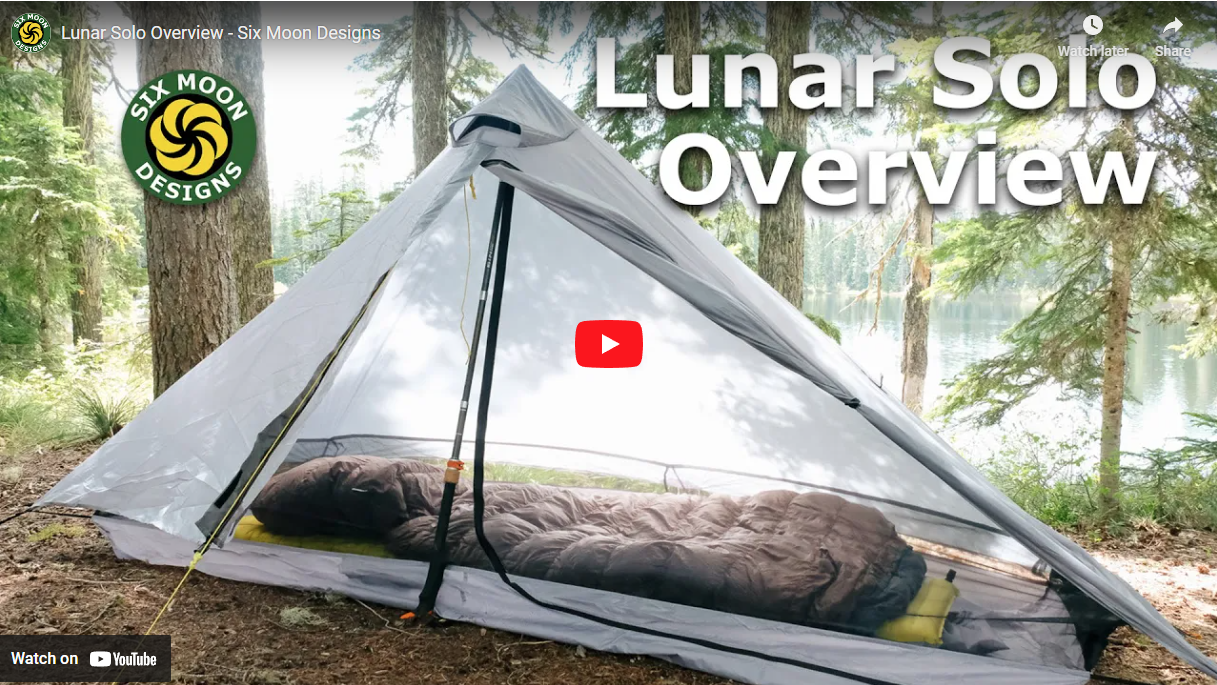
REQUIRES ONE POLE
26 oz - 740 g Solo Backpacking Tent
Save money with the award-winning Lunar Solo tent – and buy more of the ultralight gear on your list.
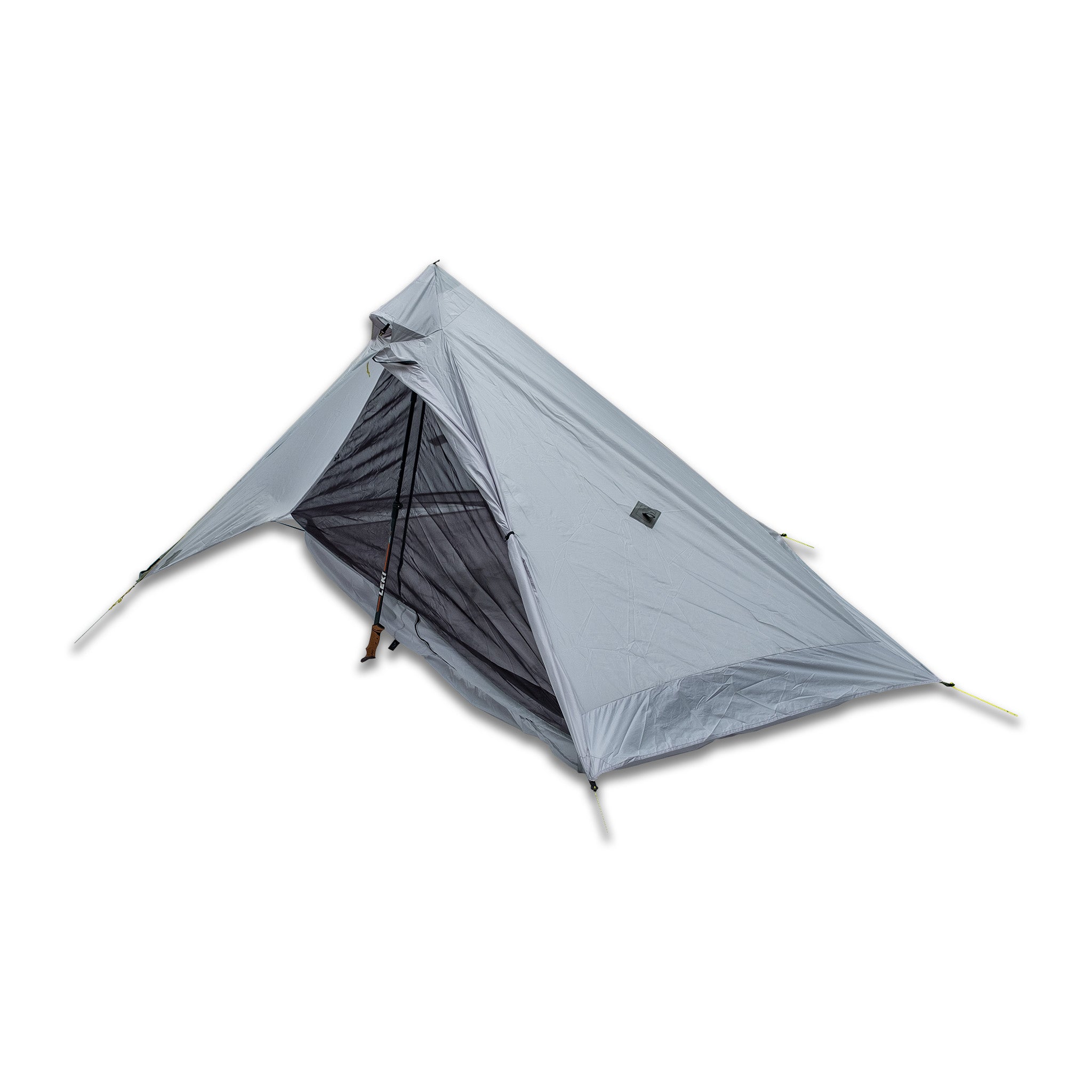
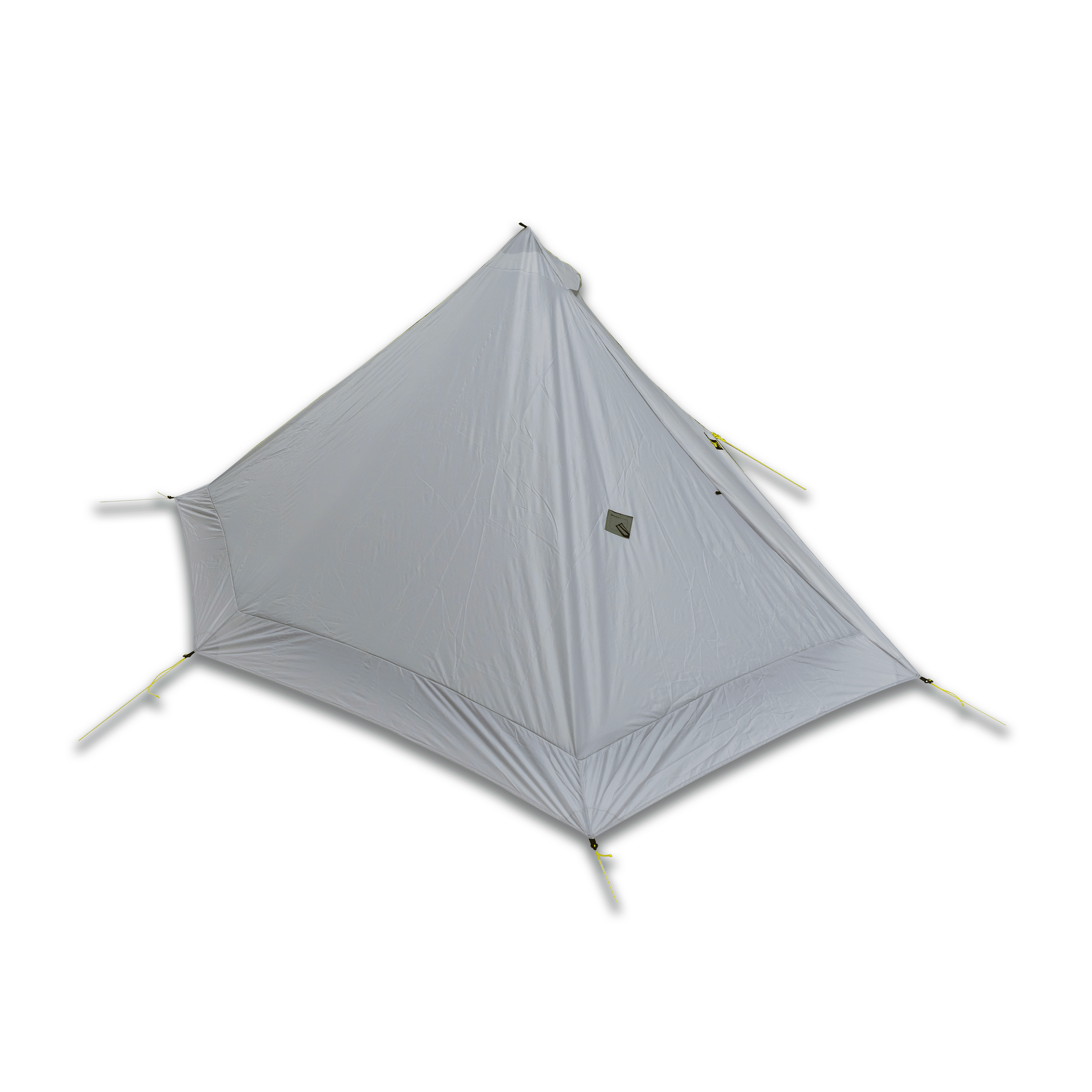
With the Lunar Solo tent, sacrifice nothing but extra weight – ultralight, sturdy, weather-tight*, and comfortable. The unique hexagonal design and steep, sloping sides help deflect high winds and shed snow, keeping you safe from the elements. The spacious 26 sq. ft. living space and extra 8.5 sq. ft. vestibule means there’s plenty of room for you AND your gear (or your favorite 4-legged friend).
*To completely repel water, shelters need to have sealer applied to the seams before use.
*Shelters including a seam sealing service may not ship immediately.
*Stakes and Support Poles Sold Separately
Construction
✓ Made with 100% Silicone-coated Polyester material to reduce fabric stretch and pack volume.
✓ 20D canopy and 40D floor keeps the Lunar Solo light but rugged.
✓ 6-in deep bathtub floor helps prevent splash back.
✓ 6-in mesh lining above the bathtub floor increases ventilation and keeps you further from the canopy walls, so you stay nice and dry.
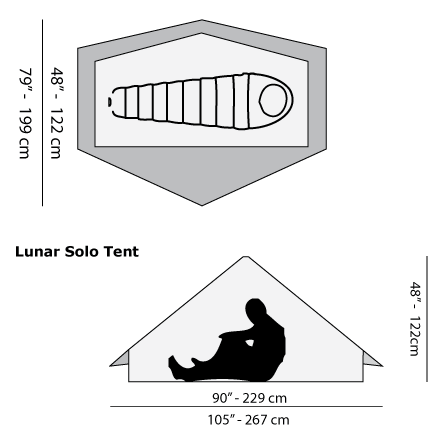
✓ 26 sq. ft. of living space with a peak height of 49 inches – plenty of room for all kinds of seated tasks. Canopy creates an 8.5sq. ft. vestibule for added protection during storms.
✓ Easily pitched with one adjustable trekking pole to 49 inch peak*.
For detailed setup instructions, check out Lunar Solo - The Perfect Pitch.
Features
Full Vestibule provides protection while still maintaining good ventilation when closed. Fully open, the vestibule maximizes ventilation and view.
High Vent removes excess moisture build up.
Zipper Vestibule Closure makes opening and closing the vestibule a snap.
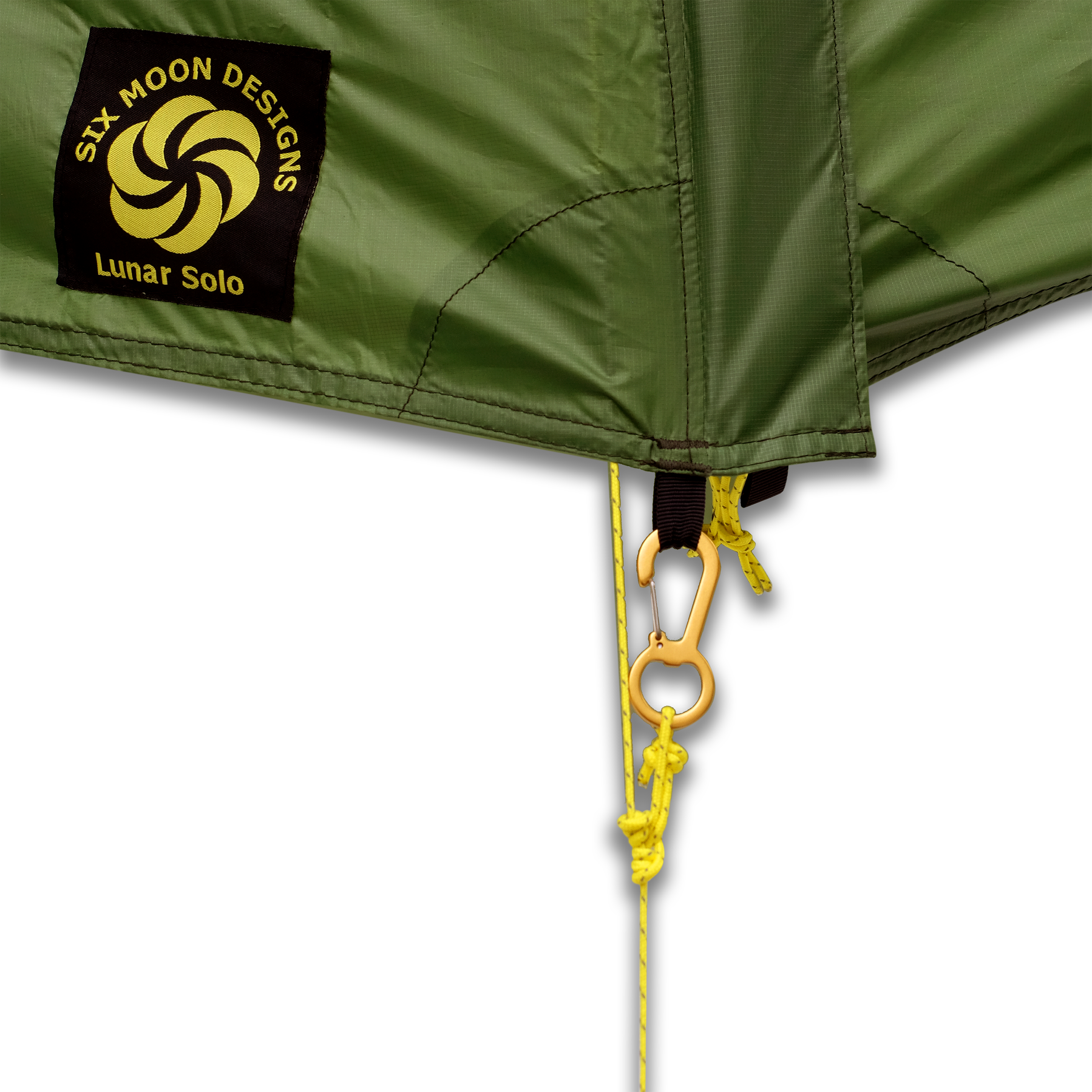
Easy Tensioning Adjustment makes keeping the tent taut easy to accomplish from the warmth of your sleeping bag. (Re-tension straps have been added to all tie out points.)
Floating Canopy allows the canopy to be set to different heights.
Floating Floor reduces floor stress and helps to minimize punctures from sharp objects.
Optimized Sleeping Area is oriented to maximize usable space, ventilation, and view. A peak height of 49 inches gives you plenty of headroom.
Center Pole Support significantly improves the ability of the tent to handle wind and snow loads.
Single Hiking Pole Support reduces the amount of gear need.
Internal Gear Area keeps your gear easily accessible.
Oversized Screen Door allows easy entrance and exit while keeping the front pole out of your way.
Ultralight Waterproof Canopy is made from high strength 20 denier Silicone Polyester.
Handy Mesh Cargo Pocket to keep all your essentials close at hand.
Extremely Easy Setup in less than two minutes under any conditions.
Specifications
General
3
1+
Tent, Stuff Sacks, Guy Lines
11" X 4.5"
26 oz | 740 g (Does not include stakes or poles)
6 (Sold Separately)
Green, Gray
Materials
20D Silicone Coated Polyester
40D Silicone Coated Polyester
#3 YKK
3,000 mm
Design
Tent
Single 49" Pole (Not Included)
Side Entry
26.252ft² - 2.4 m²
8.5 ft²- .8 m²
90" | 228 cm
48" | 121 cm
- YTYoshimi T.Verified BuyerRated 5 out of 5 stars1 month agoOh it's so light...
I just used the tent for the first time on Mt. Hood Timberline trail (west side only from the Lodge due to the fire in the East) for 3 nights. My friend also used hers, exactly the same one for her first time. We both took for a while to figure out how to locate the stakes so that the tent has the best angles of the top slopes, not sagging (we did some practice at home as well and recommend to do so). After the first night my friend used the strings on the both sides to tie using the attached holes on the sides of the tent but I didn't use. The third night was a bit windy and the ground was very sandy and so I needed to put rocks on stakes to prevent the tent to get blown away. I definitely like the light weight and the compact size in my backpack. Only thing I was not sure is how to put the tent back in the small bag nicely with the top hard U shape (for the vent). I thought I would damage the part and needed to be careful. I'd like to hear the advice for it.
- JAJoe A.Verified BuyerRated 5 out of 5 stars3 months agoSo Many Years and Still One of the Best
Its a great tent. It really is simple to pitch, using 1 pole. I recommend practicing a a bunch of times in different conditions in your yard or somewhere BEFORE you actually take it out in the wilderness to use it.. as with any other tent and gear. There is so much room inside for sleeping, riding out a storm or hiding out from mosquitoes! After many years and many tarps, tents and other shelters in a all 4 seasons, I always come back for my beloved Lunar Solo. The weight is spot on, its packs down very small, it pitches incredibly fast and breaks down even faster.
- JLJethro L.Verified ReviewerRated 5 out of 5 stars3 months agoMy sanctuary out in the wild.
So far I’ve taking this tent on a solo ridge hike in Oahu and out in the ancient lava fields of the Big Island of Hawaii! It’s held on with winds up to 15 mph and gusts up to 25! Feels like more. But so far I’m loving this shelter. It’s a pretty good tent. I love how easy it is to pitch. The guy line tensioning system is a no brainer.
- GBGreg B.Verified BuyerRated 5 out of 5 stars3 months agoTall Guy Club
As a 6’6 person i was always scared of finding a backpacking tent to fit. Then i found Six Moon solo tent. I have more than enough room inside without my face or feet touching any of the walls. And even crazier i have some room on either side. First night on the trail was it was a summer thunderstorm night and i was completely dry and able to do some activities ( like changing into dry clothes ) in my tent. Highly recommend for any tall hikers or people with a dog because you fill fit. Highly recommend the YouTube videos if you are having trouble pitching, it makes alot more sense and able to do it very quickly after one watch. Highly recommend
- AArielleVerified BuyerRated 5 out of 5 stars4 months agoAMAZING TENT AMAZING COMPANY
This tent is AWESOME! Took it on a 4 day 3 night trip on the TCT, and it held up perfectly. Lightweight and exactly what I was looking for. Couldn’t be happier, EXCEPT…
If i weren’t already obsessed with my tent, I am even more so with six moon as a company. I did a pretty awful job seam sealing my tent, but after a great chat with Serena I was able to send it back for a proper job. Blown away by the results, as well as their customer service!! :)
One happy camper over here. Will be a six moon customer for life, and recommending to all of my friends. <3